

Country Info: Kenya
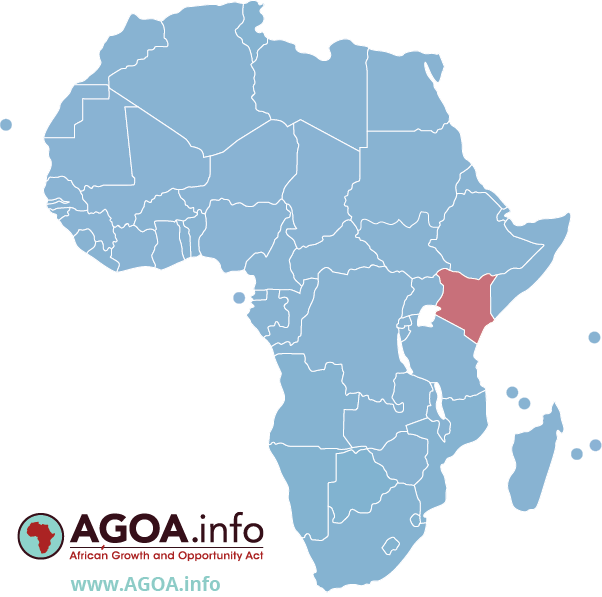
Bilateral Trade by Sector: United States - Kenya
Value ('1000 dollars), US 'domestic exports' *, US 'imports for consumption' / Includes year-to-date data
Economic Background
Kenya is the economic, financial, and transport hub of East Africa. Kenya’s real GDP growth has averaged over 5% for the last decade. Since 2014, Kenya has been ranked as a lower middle income country because its per capita GDP crossed a World Bank threshold. While Kenya has a growing entrepreneurial middle class and steady growth, its economic development has been impaired by weak governance and corruption.
Although reliable numbers are hard to find, unemployment and under-employment are extremely high, and could be near 40% of the population. In 2013, the country adopted a devolved system of government with the creation of 47 counties, and is in the process of devolving state revenues and responsibilities to the counties.
Agriculture remains the backbone of the Kenyan economy, contributing one-third of GDP. About 75% of Kenya’s population of roughly 48.5 million work at least part-time in the agricultural sector, including livestock and pastoral activities. Over 75% of agricultural output is from small-scale, rain-fed farming or livestock production.
Tourism also holds a significant place in Kenya’s economy. In spite of political turmoil throughout the second half of 2017, tourism was up 20%, showcasing the strength of this sector. Kenya has long been a target of terrorist activity and has struggled with instability along its northeastern borders. Some high visibility terrorist attacks during 2013-2015 (e.g., at Nairobi’s Westgate Mall and Garissa University) affected the tourism industry severely, but the sector rebounded strongly in 2016-2017 and appears poised to continue growing.
Inadequate infrastructure continues to hamper Kenya’s efforts to improve its annual growth so that it can meaningfully address poverty and unemployment. The KENYATTA administration has been successful in courting external investment for infrastructure development. International financial institutions and donors remain important to Kenya's growth and development, but Kenya has also successfully raised capital in the global bond market issuing its first sovereign bond offering in mid-2014, with a second occurring in February 2018.
The first phase of a Chinese-financed and constructed standard gauge railway connecting Mombasa and Nairobi opened in May 2017.
In 2016 the government was forced to take over three small and undercapitalized banks when underlying weaknesses were exposed. The government also enacted legislation that limits interest rates banks can charge on loans and set a rate that banks must pay their depositors. This measure led to a sharp shrinkage of credit in the economy. A prolonged election cycle in 2017 hurt the economy, drained government resources, and slowed GDP growth. Drought-like conditions in parts of the country pushed 2017 inflation above 8%, but the rate had fallen to 4.5% in February 2018.
The economy, however, is well placed to resume its decade-long 5%-6% growth rate. While fiscal deficits continue to pose risks in the medium term, other economic indicators, including foreign exchange reserves, interest rates, current account deficits, remittances and FDI are positive. The credit and drought-related impediments were temporary. Now In his second term, President KENYATTA has pledged to make economic growth and development a centerpiece of his second administration, focusing on his "Big Four" initiatives of universal healthcare, food security, affordable housing, and expansion of manufacturing.
Agricultural products
sugar cane, milk, maize, potatoes, bananas, camel milk, cassava, sweet potatoes, mangoes/guavas, cabbages
Industries
small-scale consumer goods (plastic, furniture, batteries, textiles, clothing, soap, cigarettes, flour), agricultural products, horticulture, oil refining; aluminum, steel, lead; cement, commercial ship repair, tourism, information technology
Industrial production growth rate
3.6% (2017 est.)
(Source: World Factbook, 2021)
Download related documents
Brochure | Kenya-United States FTA
Information brochure on the proposed US-Kenya FTA, including trade data and negotiating principles. Double-sided A4. For printing purposes, set 'fit to page' on your printer.
The US-Kenya FTA: insights into the bilateral trade relationship and early progress on setting terms for an FTA
On 6 February 2020, US President Donald Trump announced the United States’ intention to initiate negotiations with Kenya on a bilateral Free Trade Area (FTA). This followed a meeting between President Trump and Kenyan President Uhuru Kenyatta at the White House during a state visit by Kenyatta to the US. An FTA between the US and any country would be noteworthy, but even more so when it potentially involves the first country in...
![Brochure - AGOA performance and country profile of Kenya [updated 2023]](https://agoa.info/images/articles/15557/kenyaagoaguide.png)
Brochure - AGOA performance and country profile of Kenya [updated 2023]
An overview of Kenya's participation and utilisation of AGOA preferences since the year 2000, including relevant trade data and country-specific sector-focus. Includes profile of US exports to Angola. Double-sided A4 brochure. For printing, set 'fit to page'. Including trade data to end 2022
Kenya - National AGOA Strategy 2018-2023
Prepared by the Ministry of Industry, Trade and Cooperatives with support from the United States Agency for International Development’s (USAID) East Africa Trade and Investment Hub. The Kenya National African Growth and Opportunity Act (AGOA) Strategy and Action Plan (2018 – 2023) provides strategies and actions for increasing exports to the United States (U.S.) informed by an analysis of identified priority sectors. The overall approach...
AGOA 101 Kenya - Exporter Guide 2018
The USAID East Africa Trade and Investment Hub helps East African businesses take advantage of the African Growth and Opportunity Act (AGOA). AGOA allows for duty-free export of over 6,000 products. This guide outlines the step-by-step process that Kenyan businesses should take to export to the United States of America (U.S.A.) duty-free through AGOA and gives a general overview for the export of all AGOA products from Kenya. It...
US end-market analysis for Kenyan textiles and apparel
The apparel market in the United States (U.S.) is the largest in the world with a market value of $343 billion. In 2016, the U.S. imported apparel worth $105 billion, up from $88 billion in 2015 and $82 billion in 2014.1 U.S. consumers spent $312 billion on apparel. Ten countries account for almost 80 percent of all U.S. apparel imports with China topping the list with a 30 percent share. While Kenya does not yet stand among these countries,...
US end-market analysis for Kenyan cut flowers
Cut flowers are a major export industry in Kenya. Kenya presently ranks first among world exporters of roses to the European Union (EU), with a market share of 38 percent. However, the country has not yet made as deep of inroads into the cut flower market in the United States (U.S.). Kenyan cut flower exports to the U.S. have grown since 2010, but the country’s market share remains small, standing at 1 percent. This report analyzes emerging...
US end-market analysis for Kenyan home decor and fashion accessories
This report provides market data at a product level for use by Kenyan exporters interested in the United States (U.S.) market and to support the National African Growth and Opportunity Act (AGOA) Strategy and Action Plan for Kenya. The home décor and fashion accessories sector has the capacity to further the goals of increasing women and youth participation in manufacturing by providing greater access to economic opportunities. In 2016, the...
US end-market analysis for Kenyan speciality coffee
The United States of America (U.S.) is the largest market for coffee in the world. Within the U.S. coffee sector, the specialty coffee industry imports almost 750 million kilograms (kg) of green, specialty-grade coffee from around the world each year, often paying double the commodity price. Specialty-grade coffees are identified by their high-quality, unique taste characteristics and countries of origin. They are roasted by one of 1,400 U.S....
US end-market analysis for Kenyan tea
The tea market in the United States (U.S.) is growing, with Americans consuming larger quantities of tea each year. In 2016, the U.S. imported nearly $760 million in tea (excluding herbal tea), making it the world’s third largest tea importer.1 According to the Tea Association of the USA, the sector projects compound annual growth rates of 3 to 5 percent over the coming years. This has been driven by an increase in volume, but especially...
Kenya - National AGOA Strategy 2012 (updated version below)
The preferential market access granted to Kenya and other African countries through the Africa Growth and Opportunity Act (AGOA) has played a critical role in spurring Kenya’s exports with the US. This has been most dramatic in the case of the textiles and apparel sector, which grew at 44% a year in the few years after AGOA’s passage. In effect, AGOA has created an apparel industry in Kenya on a scale that the country would unlikely have...
Read related news articles
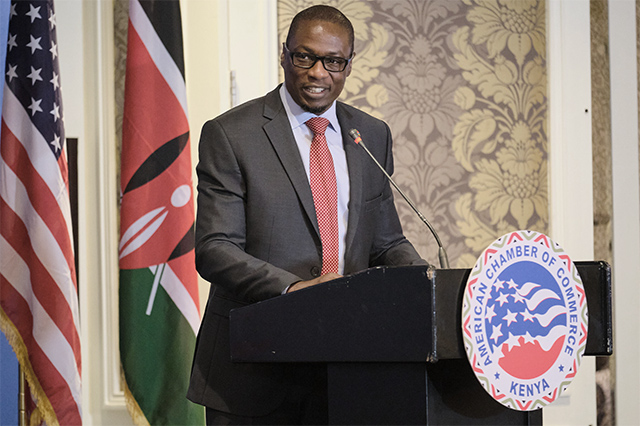
Kenya: 4th AmCham business summit to advocate for enhanced partnership and investment In US-East Africa trade
The fourth edition of the regional American Chamber of Commerce Kenya (AmCham) Business Summit, the premier platform for strengthening bilateral trade and investment between the United States, Kenya, and East Africa is set to be held on April 24–25, 2024, in Nairobi, Kenya. Kenya’s President William Ruto is confirmed as Chief Guest, leading a government delegation to the summit that aims to expand commercial opportunities and markets....
19 March 2024
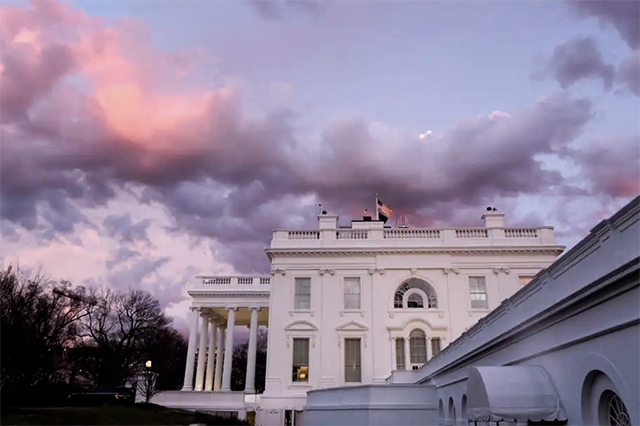
US President Biden to welcome Kenyan President Ruto to the White House in May
President Joe Biden plans to welcome Kenyan President William Ruto to the White House in May, hosting a state visit after reneging on his promise to visit Africa last year. White House press secretary Karine Jean-Pierre said Friday that the visit set for May 23 will mark the 60th anniversary of U.S.-Kenya diplomatic relations and "celebrate a partnership that is delivering for the people" of both countries while affirming "our strategic...
18 February 2024
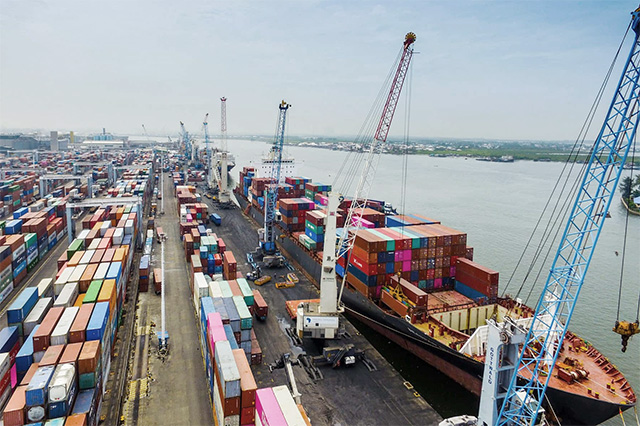
'Nigeria missing as Kenya, Ghana tap AGOA opportunities to boost foreign exchange earnings'
Africa’s biggest economy is still failing to tap the opportunities that the African Growth and Opportunity Act (AGOA) present to boost its foreign exchange, amid acute dollar shortages. The AGOA has been on for over twenty-three years as it was enacted in 2020. In 2015, the program was modernised and extended to 2025, implying that there are only about 15 months before the window closes. Some countries have taken advantage of the AGOA more...
05 February 2024
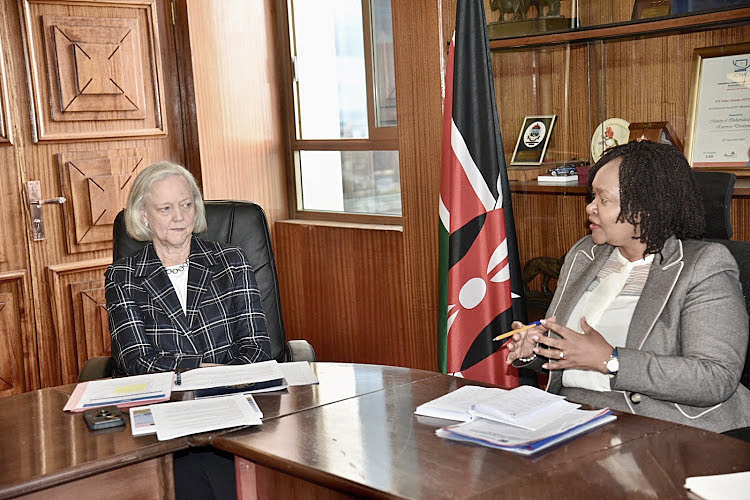
Kenya-US to deepen ICT, apparel and agriculture trade
Kenya and United States are in talks to identify areas of interest in information communication technology (ICT) sector that can interest US firms. A meeting between The US Ambassador to Kenya, Megan Whitman, and the Cabinet Secretary for Investments, Trade, and Industry Rebecca Miano, the states sought cooperation in six key areas. The meeting laid the groundwork for an enhanced collaboration between Kenya and the United States in...
09 November 2023

Kenya President Ruto joins US-Kenya business roadshow in San Francisco
Kenya's President William Ruto will address leading US technology companies and investors on Friday at the US-Kenya Business Roadshow in San Francisco organised by the American government’s Prosper Africa initiative. The roadshow - also co-organised by the US Embassy in Nairobi - highlights the business and investment potential in Kenya’s booming tech sector, a statement from the US Embassy in Kenya said. The event is part of a...
15 September 2023
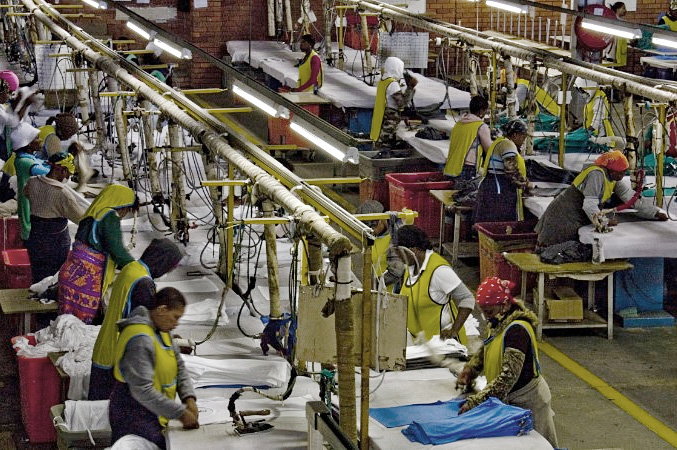
AGOA boosts Kenya's textile exports to US, sector sees 7.2% growth
The African Growth and Opportunity Act (AGOA) has benefitted Kenya’s textile and apparel sector, leading to monthly exports to the tune of Sh4.5 billion, or Sh150 million per day, last year, according to a study by London-based Institute of Economic Affairs (IEA). The programme has had a positive impact on the country’s export-processing zones (EPZs), especially in the textile and garment sector. Kenya is the second-largest exporter of...
08 August 2023
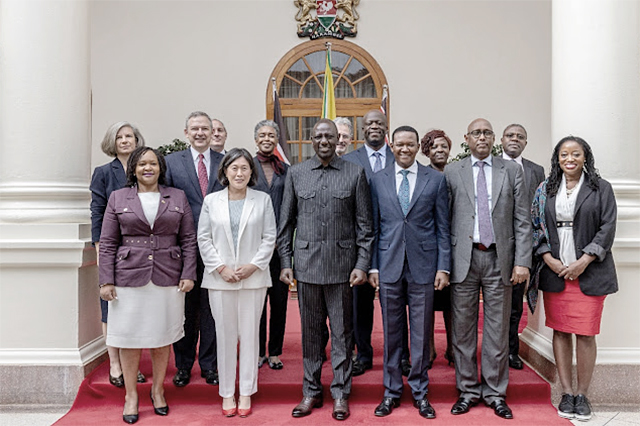
Kenya's president meets US delegates on trade and investments
Kenyan President William Ruto has today held talks with US Trade Representative, Ambassador Katherine Tai. The discussions were based on US trade policy. Ruto said that the country is ready to strengthen the already existing relations between the two nations. "We will stretch our ties beyond the African Growth and Opportunity Act (AGOA) in the wake of advanced technology and climate change, for the full exploitation of our trade potential,"...
19 July 2023
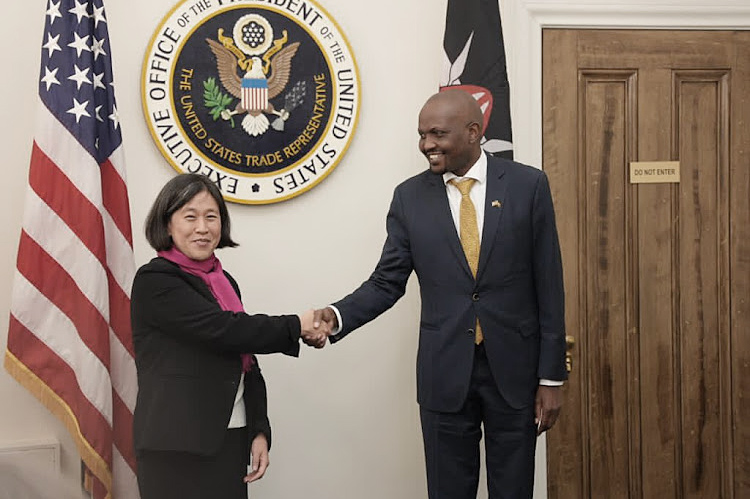
US trade rep in Nairobi as Kenya's solo deals worry the EAC block [incl. Readouts]
The US trade representative is in Nairobi to co-lead a meeting that seeks Kenya's partnership in a fresh trade deal. The Trade and Investment Framework Agreement (TIFA Council) is pursuing various agreements even as regional peers express concern over Kenya's solo approach. Yesterday, Trade Representative, Katherine Tai met patron circle members of the American Chamber of Commerce-Kenya (AmCham Kenya) ahead of today's...
17 July 2023
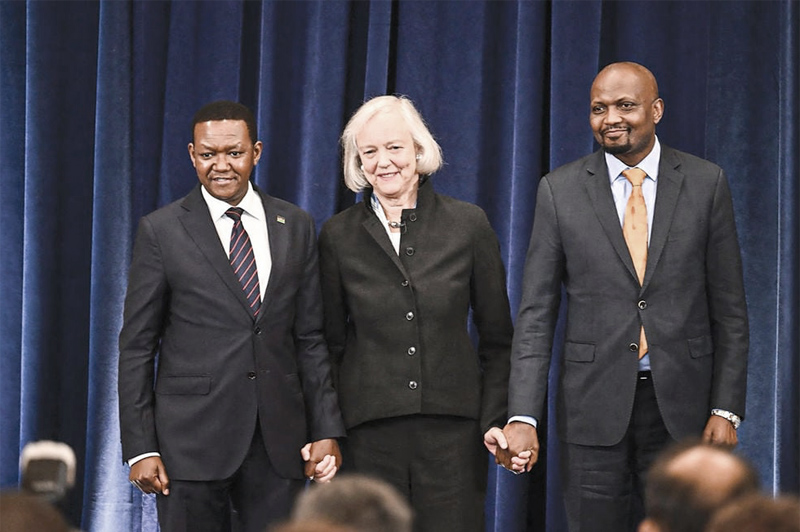
US boosts Kenya apparel industry with $55m in new trade deals
The US is giving Kenya $55 million for expansion of export processing zones in a move that will boost Nairobi’s apparel exports. US initiative Prosper Africa and the US Embassy announced the funding at the launch of the US-Kenya Business Roadshow held on April 25 in New York. The announcement was part of the commitments made by President Joe Biden at the US-Africa Leaders’ Summit last year. The funds will be channelled under USAid and...
29 April 2023
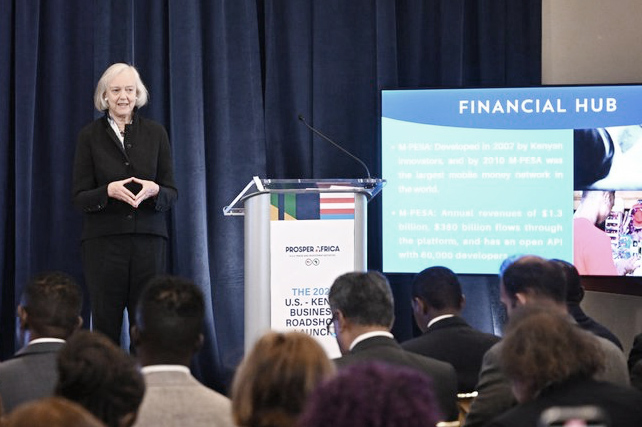
Why Africa, why Kenya? Remarks by US Ambassador to Kenya
Thank you, Scott, for the kind introduction. It is a pleasure to partner with the Prosper Africa initiative to drive investment in Kenya and countries across the African continent. I am happy to kick off our U.S.-Kenya Business Roadshow with all of you today, and to announce that we will be partnering with Prosper Africa throughout the year to engage businesses and investors in cities across the United States. Our next stops include San...
26 April 2023
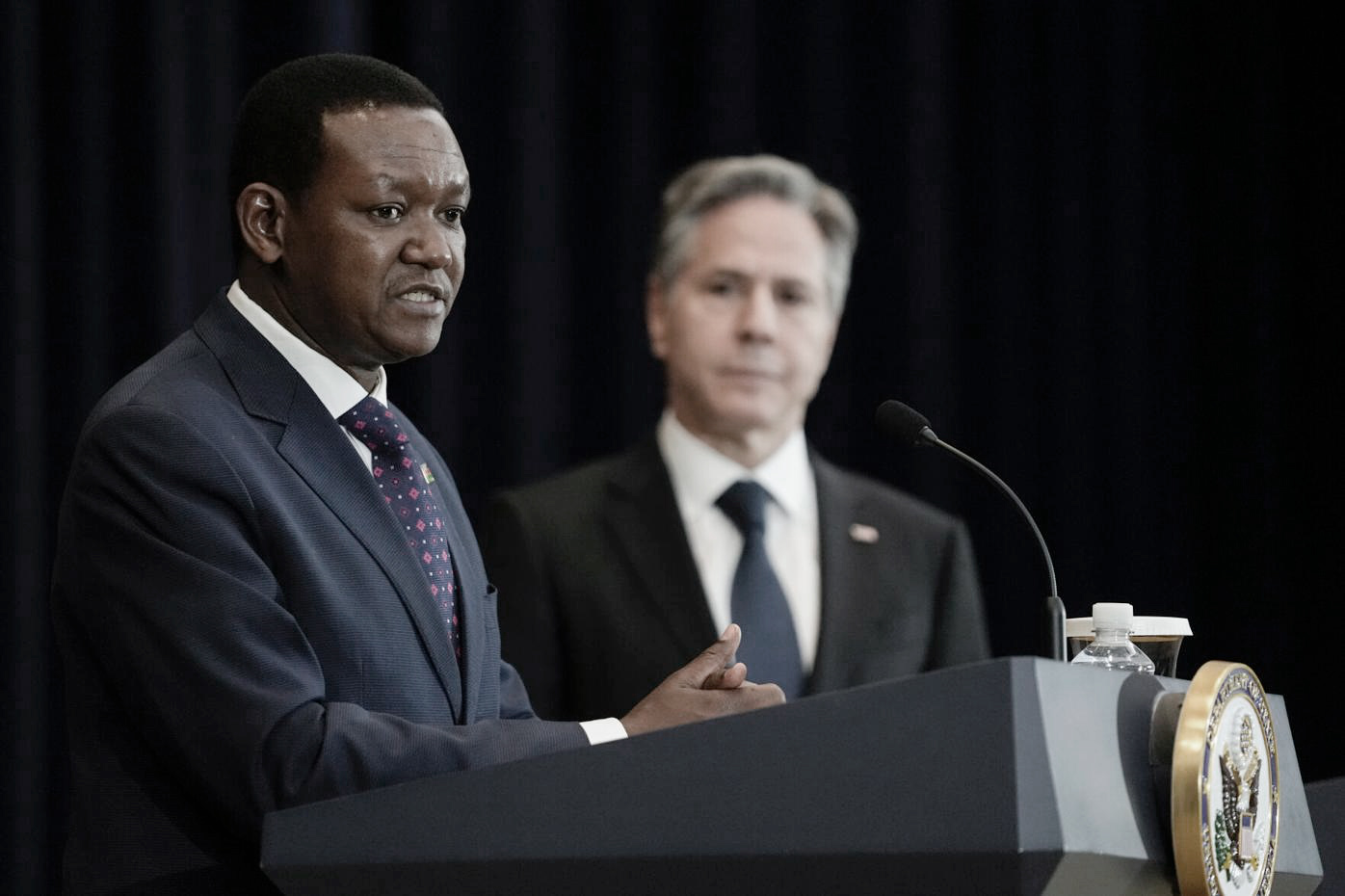
Kenya-USA: Joint Statement on the third US-Kenya bilateral strategic dialogue [incl. VIDEO]
The text of the following statement was released by the Governments of the United States of America and the Kenya on the occasion of U.S.-Kenya Bilateral Strategic Dialogue in Washington, D.C. on April 24, 2023. Begin Text: The Governments of the United States of America and the Republic of Kenya held the third iteration of the U.S.-Kenya Bilateral Strategic Dialogue in Washington, D.C. on April 24, 2023. The U.S.-Kenya Strategic...
24 April 2023