

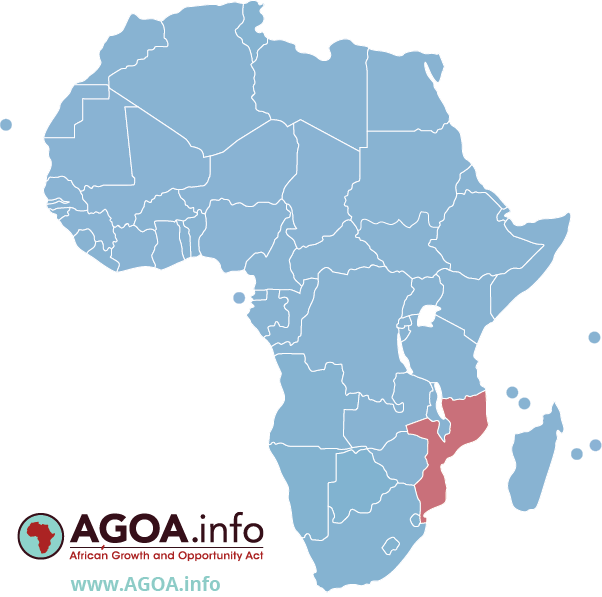
Country Info: Mozambique
Bilateral Trade by Sector: United States - Mozambique
Value ('1000 dollars), US 'domestic exports' *, US 'imports for consumption' / Includes year-to-date data
Economic Background
At independence in 1975, Mozambique was one of the world's poorest countries. Socialist policies, economic mismanagement, and a brutal civil war from 1977 to 1992 further impoverished the country. In 1987, the government embarked on a series of macroeconomic reforms designed to stabilize the economy. These steps, combined with donor assistance and with political stability since the multi-party elections in 1994, propelled the country’s GDP, in purchasing power parity terms, from $4 billion in 1993 to about $37 billion in 2017.
Fiscal reforms, including the introduction of a value-added tax and reform of the customs service, have improved the government's revenue collection abilities. In spite of these gains, about half the population remains below the poverty line and subsistence agriculture continues to employ the vast majority of the country's work force.
Mozambique's once substantial foreign debt was reduced through forgiveness and rescheduling under the IMF's Heavily Indebted Poor Countries (HIPC) and Enhanced HIPC initiatives. However, in 2016, information surfaced revealing that the Mozambican Government was responsible for over $2 billion in government-backed loans secured between 2012-14 by state-owned defense and security companies without parliamentary approval or national budget inclusion; this prompted the IMF and international donors to halt direct budget support to the Government of Mozambique.
An international audit was performed on Mozambique’s debt in 2016-17, but debt restructuring and resumption of donor support have yet to occur.
Mozambique grew at an average annual rate of 6%-8% in the decade leading up to 2015, one of Africa's strongest performances, but the sizable external debt burden, donor withdrawal, elevated inflation, and currency depreciation contributed to slower growth in 2016-17.
Two major International consortiums, led by American companies ExxonMobil and Anadarko, are seeking approval to develop massive natural gas deposits off the coast of Cabo Delgado province, in what has the potential to become the largest infrastructure project in Africa. . The government predicts sales of liquefied natural gas from these projects could generate several billion dollars in revenues annually sometime after 2022.
Agricultural products
sugar cane, cassava, maize, milk, bananas, tomatoes, sweet potatoes, rice, sorghum, potatoes
Industries
aluminum, petroleum products, chemicals (fertilizer, soap, paints), textiles, cement, glass, asbestos, tobacco, food, beverages
Industrial production growth rate
4.9% (2017 est.)
(Source: World Factbook, 2021)
Download related documents
![Brochure - AGOA performance and country profile of Mozambique [updated 2023]](https://agoa.info/images/articles/15937/mozambiqueagoaguide.png)
Brochure - AGOA performance and country profile of Mozambique [updated 2023]
An overview of Mozambique's participation and utilisation of AGOA preferences since the year 2000, including relevant trade data and country-specific sector-focus. Includes profile of US exports to Mozambique. Double-sided A4 brochure. For printing, set 'fit to page'. Includes trade data to end 2022.
Mozambique: Politics, Economy, and US Relations
Mozambique, a significant recipient of U.S. development assistance, is a southeastern African country nearly twice the size of California, with a population of 27.9 million people. It achieved rapid growth following a post-independence civil war (1977-1992), but faces a range of political, economic, and security challenges. These include a political scandal over state-guaranteed, allegedly corrupt bank loans received by state-owned firms,...
Mozambique - National AGOA Strategy
Currently Mozambique has a low level of trade with the U.S. relative to other trading partners. is Strategy is therefore designed to: a.) identify AGOA-eligible sectors and products which Mozambique could export or increase export to the U.S., b.) to provide guidance on increasing the awareness and expertise of AGOA among Mozambique’s relevant public and private stakeholders and c.) to elaborate a set of strategic actions into short-term,...
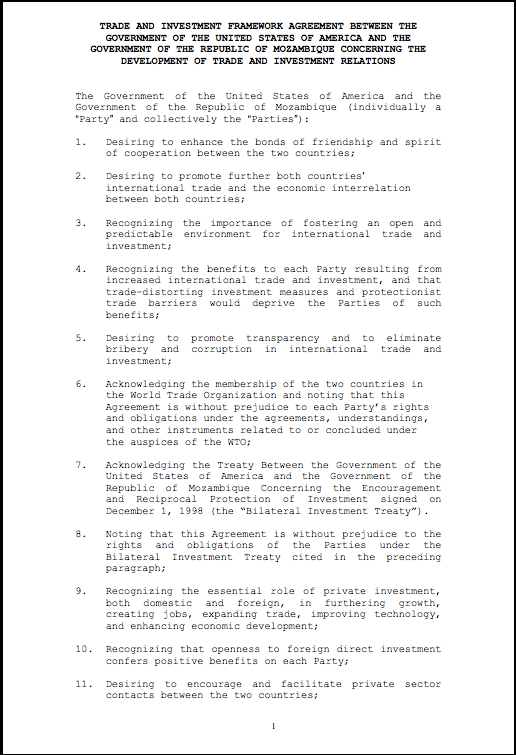
Mozambique - United States (TIFA)
Trade and Investment Framework Agreement between the United States of America and the Republic of Mozambique.
Read related news articles
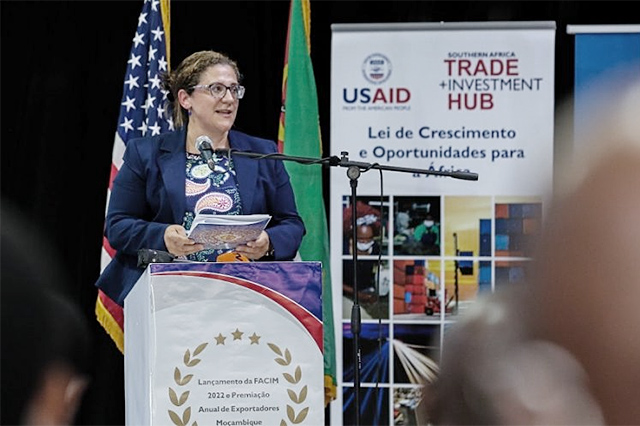
US recognizes top Mozambique exporters at second annual exporter awards ceremony [Video]
On August 11, USAID Mission Director Helen Pataki, joined by His Excellency the Minister of Industry and Trade Silvino Augusto José Moreno, His Excellency Governor of the Maputo Province Júlio Parruque, and other partners recognized the continuing successes of Mozambican exporters in 2022. [ Scroll to the bottom to view a video of the event ] This was at the second edition of the Annual Exporter Awards, a collaboration between the...
15 August 2022
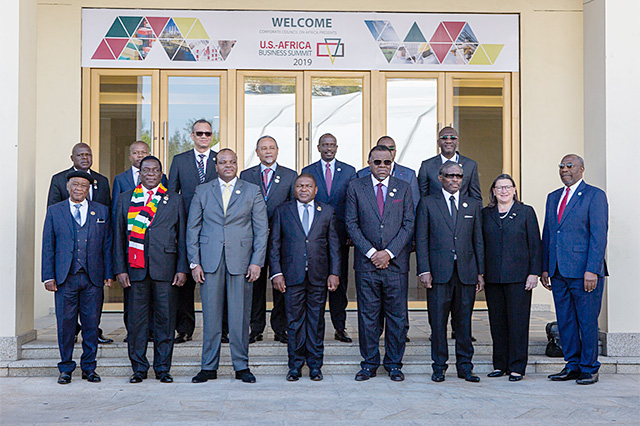
Opinion: US economic intervention into Africa
US deputy Secretary of Commerce Karen on Wednesday announced at the opening ceremony of the U.S.-Africa Business Summit on Wednesday in Maputo, that the Trump administration message to Africa is simple and blunt:” Choose the United States over China and Russia.” One can clearly see this as another chapter of President Trump to isolate the Russians and China from trading and investing globally. One must see this latest attempt to...
27 June 2019
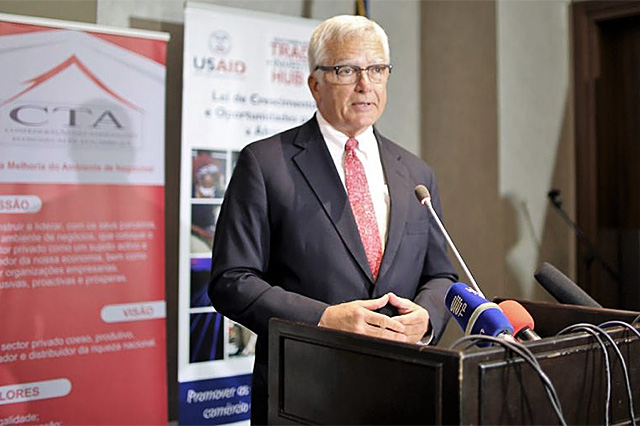
Mozambique launches National AGOA utilization strategy 2018- 2025
The African Growth and Opportunity Act is a U.S. trade act that provides duty-free import to goods produced in qualifying Sub-Saharan African (SSA) countries. AGOA came into force in 2000 and was most recently extended to 2025 through the AGOA Extension & Enhancement Act (AEEA). Mozambique has been eligible for AGOA since 2000. One of the additions to AGOA through the AEEA is language in the legislation that states countries...
16 May 2018

The United States supports increased trade with Mozambique through AGOA
The Ministry of Industry and Commerce launched today Mozambique’s AGOA Utilization Strategy. Designed to increase trade and economic growth throughout Africa, the Strategy will help ensure Mozambican businesses are better positioned to use AGOA for duty free access to the U.S. market for more than 6,500 products. Although AGOA was enacted in the year 2000, only $1 million of the $100 million of Mozambican exports into the United...
16 May 2018
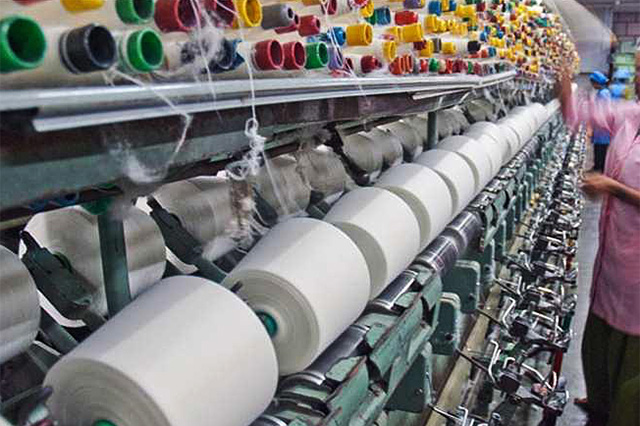
Mozambique hopes to rebuild clothing sector
The Mozambican textile and clothing industries are beginning to re-emerge after a near total collapse in the 1990s. The sector now has about 20 factories but many are operating below capacity, and producing only when they receive orders, reports Mozambican news agency AIM. At the end of the 1980s there were 78 textile and clothing factories - but they closed, partly due to the obsolescence of their machinery, and partly because the...
20 September 2012
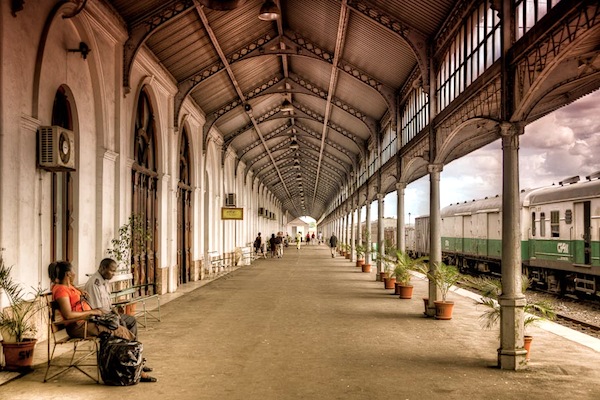
Maputo conference promotes USA / Mozambique economic relations
A business development conference with the theme topic of "Let's Do Business: US-Mozambique 2012" is scheduled to take place on Wednesday, organised by the United States embassy together with the USA-Mozambique Chamber of Commerce (CCMUSA). An official source contacted on Tuesday by Macauhub in Maputo said the United States was not among the top ten foreign investors in Mozambique and that the most visible investment by companies from that...
18 April 2012
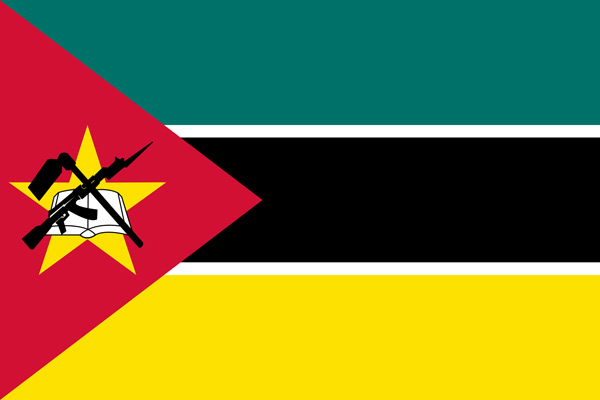
Mozambique and the United States negotiate new trade and investment framework agreement
A delegation of the United States government is visiting Maputo until Friday in order to carry out the revision of the United States-Mozambique Trade and Investment Framework Agreement (TIFA), according to a report in Mozambican newspaper Notícias. Known as TIFA, the agreement that is currently in place between the US and Mozambique was signed in June, 2005. Notícias said that ambassador Demetrios Marantis, the assistant United States...
18 January 2012
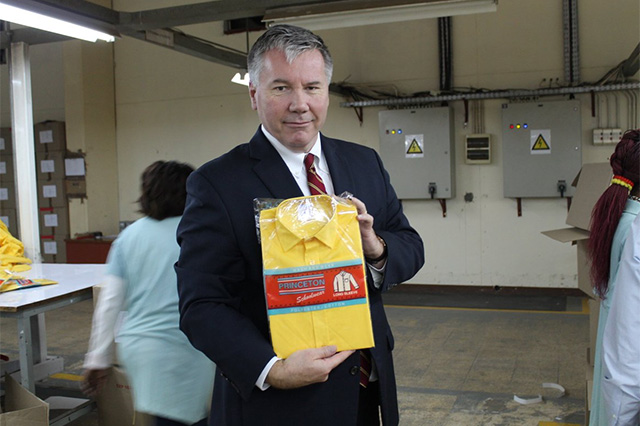
Mozambique clothing manufacturer eyes South African, AGOA market
Mozambican clothing manufacturer Moztex, formerly known as Texlom, has started to export articles of clothing to South Africa, and since August has exported 1,200 items to its neighbouring market, a company official said in Matola Wednesday. The representative for Portugal and Mozambique of the Aga Khan Development Network, Nazim Ahmad, said that the company planned to start exporting its products to the United States under the terms of the...
16 December 2010